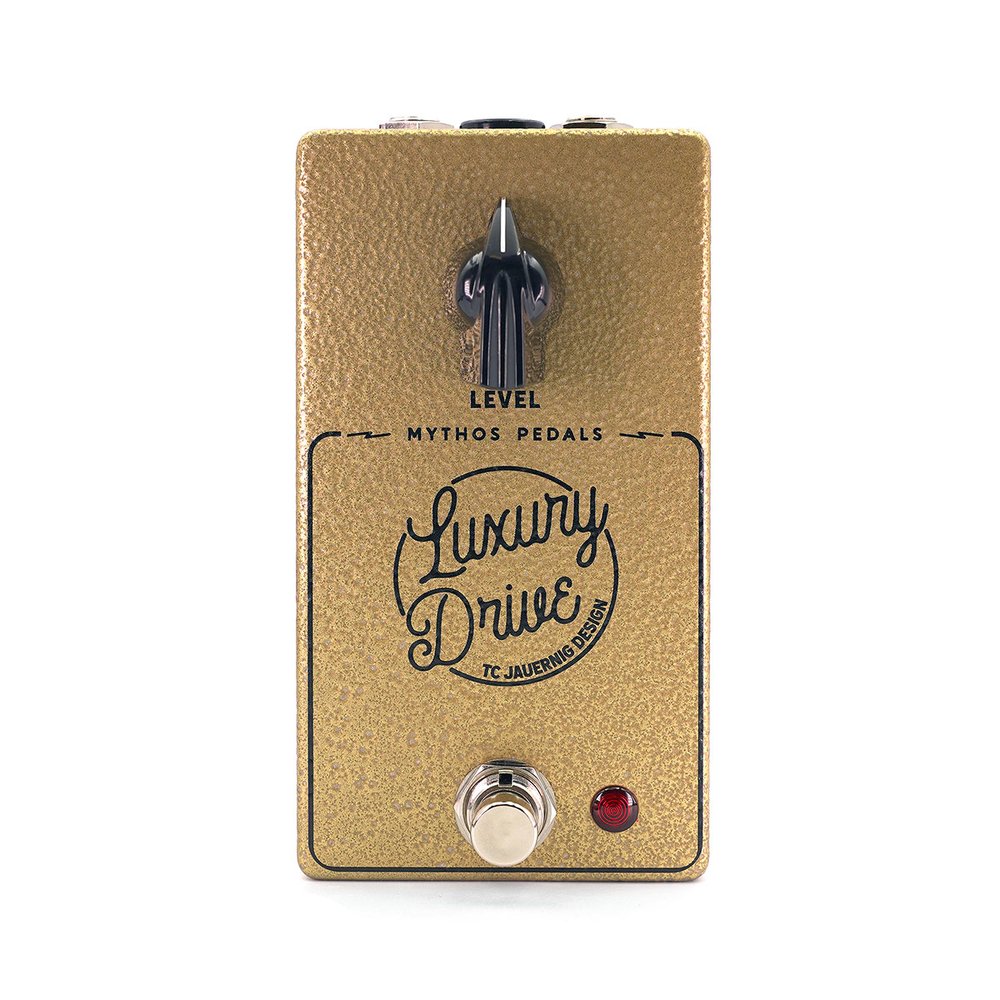
I like overdrives. Overdrives are my favorite guitar effect, it’s soft clipping which creates a smoother tone than hard clipping distortion and fuzzes and a lot of ODs enjoy being stacked. And there’s so many flavors of them.
In the answer above I posted about the different OD types.
In particular though, I’m beginning to like a few different styles of OD – notably the Dumble style OD, the Transparent style OD and the Clean/Tone booster. I’ll give examples of each:
Dumble Style ODs
There are many of them out there mostly modeled on the Dumble Overdrive Special type sound.
Hermida/Lovepedals Zendrive
The original D-style OD pedal that kind of created the blueprint for others to follow.
J Rockett The Dude
A nice top-mounted D-style pedal
Way Huge Overrated Special
Wampler Euphoria
A very versatile option
Vertex Ultraphonix
Another top mounted option
Mad Professor Simble
Now discontinued, but have heard lots of great things about it
Amplified Nation Big Bloom
Kingsley Page DS
Expensive, but a tube powered D-style pedal
Tubesteader Beekeeper
Another tube powered D style pedal
Ethos Overdrive
Definitely one of the most complicated in depth D-style pedals..
G-town Holy Grail Overdrive
certainly looks the part of a homemade dumble pedal
Shin Dumbloid
Same thing for the dumbloid…
MXR Shinjuku Drive
MXR made a mass produced version of the Dumbloid..
Transparent (non coloration) overdrives
Note that I’m not going to include Klon type ODs here because Klons are not actually transparent and do color the tone..
Greer Lightspeed
Nobels ODR-1
Wampler Belle
Maxon OOD9
MXR Timmy
JHS Morning Glory
Seymour Duncan Forza
Earthquaker Westwood
Xotic Soul Driven
Clean/Tone boosters
Note that many of these include ‘Dumble’ style clean overdrives as well
for me this is what I have and the order I have it
Guitar ->
Tuner pedal – I use the Boss TU3 for its great buffer which is important to preserve your tone when you have a bunch of pedals with true bypass. True Bypass is nice and all but if you have ALL true bypass it will suck your tone out so make sure you have a pedal with a buffer at the beginning and end of your chain.
Wah pedal -> I use the BBE Wah, although any number of options is great here. Teese, Fulltone, Budda, Vox, Dunlop, Xotic all make great wahs
Booster/Preamp pedal -> I use the Dunlop EP101 for this. There’s some great pedals for this. The Keeley Katana and Xotic EP Booster are also some nice alternatives. There’s also Treble Boosters like the Dallas Rangemaster and its clones (Brian May pedals has a few of these).
Overdrive pedal -> there’s SO many overdrive pedals. I personally use the Wampler Euphoria due to its versatility but there’s so many great OD pedals. There’s the Ibanez/Maxon Tubescreamer and Tubescreamer clones like the Seymour Duncan 805 and Wampler Clarksdale, there’s Klon Centaur and Klon clones like the Wampler Tumnus and MXR Sugar Drive, there’s Dumble type overdrives like the Fulltone OCD, Hermida Zendrive and MXR Shinjuku Drive, there’s Chandler Tube Driver types like the MXR FET Driver and Lovepedals Dover Drive etc I can go on and on here
Distortion/Fuzz pedal -> Again, so many choices here. There’s the ‘classic’ hard clip distortions like the Pro Co Rat, Boss SD-1 etc but these days there’s a bunch of ‘amp in a box’ pedals here as well which attempt to duplicate the sounds of the Marshall Plexi (Xotic SL Drive, Lovepedals Purple Plexi, RambleFX Marvel Drive, JHS Charlie Brown etc), Bluesbreaker, Fender Bassman, Fender Deluxe etc Supro even makes a pedal that duplicates their small amp! For Fuzzes there’s generally Fuzz Faces (now made by Dunlop) and Fuzz Face clones (either silicon or germanium), Electro-harmonix Big Muff Pi and Big Muff Pi clones, and Maestro Tone Bender (not made anymore) and Tone Bender clones. I personally use the BBE Windowpane because its a cheap and an effective silicon fuzz clone.
Delay/Flanger/Phaser/other modulation etc -> I put my delay near the end of my chain here though depending on your amp you may choose to run it through the effects loop instead. I found Delay to be the most useful out of the modulation effects. There’s generally three types here, analog delay like the Boss DM-2W I use (Way Huge Aqua Puss, Electro-harmonix Memory man, Maxon AD9 and MXR Carbon Copy are a few other popular analog delays), tape delay like the Maestro Echoplex and its clones (Strymon El Capistan, Keeley Magnetic Echo, Catalinbread Belle Epoch etc), digital delay like the Boss DD-7 etc although some specialists like Catalinbread even try to copy obscure delays like the oil drum and echorec delays
Compressor -> I put my compressor after my delay, some people may put it before. I personally use the Xotic SP Compressor which is a copy of the Ross compressor which is a popular compressor, but the Keeley Compressor, MXR Custom Comp, etc are also popular
Reverb -> This is my second to last effect in my chain and its because I like reverb to apply to everything. Again there’s many reverb types but the most popular reverbs are the Spring Reverbs (Catalinbread Topanga, Hermida Reverb etc), Plate Reverbs (Catalinbread Talisman), Hall/Room Reverbs (Keeley Abbey Chamber) or some combination of those (Keeley Omni Reverb which I use, Keeley Hooke, Digitech Supernatural, TC Electronic Hall of Fame, Electro-Harmonix Holy Grail, Strymon Flint etc)
Looper -> Since I’m a solo guitarists this is pretty necessary for me. If you’re in a band, you might or might not need it. I use the Boss RC-3 looper. The Digitech Jam-man is also pretty popular. In addition, this is the second buffered pedal I use and put it at the end of my chain in order to preserve my highs.
A while ago, I made a post about the best small handwired tube amplifiers, and what better to follow that up than with the best overdrive guitar pedals, both mainstream and boutique kinds. I’m going to look at ‘traditional’ overdrives, and not the crazy wacky ones with a million different settings. Let’s take a look.
So.. the options range from the relatively inexpensive EHX East River Drive to the $350 Hand wired TS808 Tubescreamer. I personally own the Seymour Duncan 805 and Maxon TBO-9 pedals, and they are great overdrives. Would love to hear some feedback about this list.
Alright, a break from politics for a while. Since I’m one of the rare Asians that can play guitar better than piano, some ask me for improving their tone on guitar.
Well, there’s several key guidelines to follow.
Firstly, tone is subjective. What kind of tone do you want? Hendrix? Metallica? Slash? Those all have very different tones. Personally though, my tone tends to go somewhere in between Jimi Hendrix and John Mayer with a bit of Eric Clapton on the side. Though I do play blues, it’s not the overwound, in your face, Stevie Ray Vaughan type. For this reason, I tend to play clean alot. Here is an overview of what equipment I use and what tips I can give people:
1) Amplifier: Your amplifier is probably what constitutes most of your tone. I recommend a good tube amp, because tubes sound more natural and organic than solid state, plus they can be driven louder. However, tube amps are pretty expensive. That’s why I suggest starting out with a solid state amp and then progressing to a tube amp. Good tube amps for clean tone include Fender Twin Reverb, as well as Fender Vibroverb, Fender Bassman, or any other Fender amplifier. Vox are also a good choice for that British sound. If you are looking for a more boutique amp, try Victoria Amp. I personally use a Traynor YCV20.
2) Speakers and Tubes: This kind of goes along with the amp thing. Speakers and tubes affect the amp, which affects your tone. Popular tubes include JJ Tubes, Electro Harmonix and Groove Tubes. 6L6 power tubes tend be a better fit for clean tones than EL84 or EL34s. For speakers, try Celestion, Jensen, Tone Tubby and Eminence. I personally use a 12″ Celestion Alnico Blue for my small amp.
3) Strings and Cables: Yes, the type of strings and cables you use for your guitar affects your tone. Use a good quality set of both. For strings, there’s Ernie Ball, D’addario, and Dean Markley. I personally use Elixir Strings because of their longevity and smoothness. For cables, there’s a bunch: Pro Co, Monster cable, Planet Waves, but personally I just use Fender cables.
4) Guitar: yes, obviously the guitar affects the tone. I prefer and have always used Fender Stratocasters for their versatility and gorgeous clean tone compared to any other type of guitar, but for clean tone, good calls can also be made for Fender telecasters, Epiphone Casinos, Gibson ES-335, Gretsch Country Gentlemens, etc. I usually prefer nitrocellulose finished guitars as opposed to polyurethane finished because the nitro lacquer is a thinner layer of paint, which gives the guitar more room to resonate, and therefore more tone. However, most new guitars these days will be poly finished, and the only way to get nitro finished would be to get a vintage guitar or a vintage reissue. I personally have a 1960s reissue American Stratocaster in sunburst with nitro paint and it plays wonderfully.
5) Pickups: Yes, guitar pickups affect tone. There is evidence that handwound pickups sound better than machine wound pickups because of their uneven wind and dispersed frequencies. Therefore, try to get handwound pickups, even if they are expensive. The big three pickup makers include Dimarzio, Seymour Duncan and of course, Fender. More modern pickups are Lace and EMG. However if you want handwound pickups, try Lindy Fralin, Lollar, Bareknuckle, Rio grande, and a whole bunch more of small pickups businesses.
Generally, Alnico magnets sound better than ceramic (Alnico II, III and V are most used for single coils). Either formvar or enamel wire is used for vintage pickups, and make sure they are staggered for your neck (ie. vintage radius 7.25″ should have vintage stagger and modern necks should have flat stagger pickups).
I personally use a set of custom wound Rumpel pickups, and they have been amazing.
6) Pedals: What I’m going to say is… try not to use too many pedals. Too many interferes with tone purity. If you are going to use alot of pedals, make sure they are true bypass so that they don’t color your tone when they are bypassed, and use an equalizer or compressor to smooth out your dynamics. A side note that analog effects tend to be warmer sounding than digital effects, but that’s just personal preference for me. It’s almost like a vinyl record vs a CD player. They sound similar, but the analog sound is created more naturally. You have many different effects makers today. Digitech, Boss, Dunlop, and most large gear manufacturers such as Ibanez, Vox, Marshall, Fender, and even Seymour Duncan. I personally use BBE and Tonerider (who also makes a great set of pickups), because they are cheaper, and are good quality. But if you really want the best tone, there are boutique effects makers such as Keeley, Fulltone, Teese if you really want to spend more money to get the best.
7) You: Most importantly, tone is in your fingers, so you can’t really improve this one with money. You’ll have to practice and get better, make sure notes have vibrato, smoother licks have legato, and quicker licks have alternate picking and staccato, and so forth. You can visit Ultimate guitar if you want tabs or tutorials.
And that’s it! I’ve been working on my tone for a while now, and I think it’s getting better and better. I will continue to post more videos as soon as I get some more songs recorded. I’m also thinking about getting a good microphone, studio monitors and mixer so I can do a professional video recording, but that will have to wait until my financial situation clears up.